Curious by Nature Transcripts
The Art of Aha!
Curious by Nature🍃
the Art of Listening
By Amanda Lanham
Artful Narratives
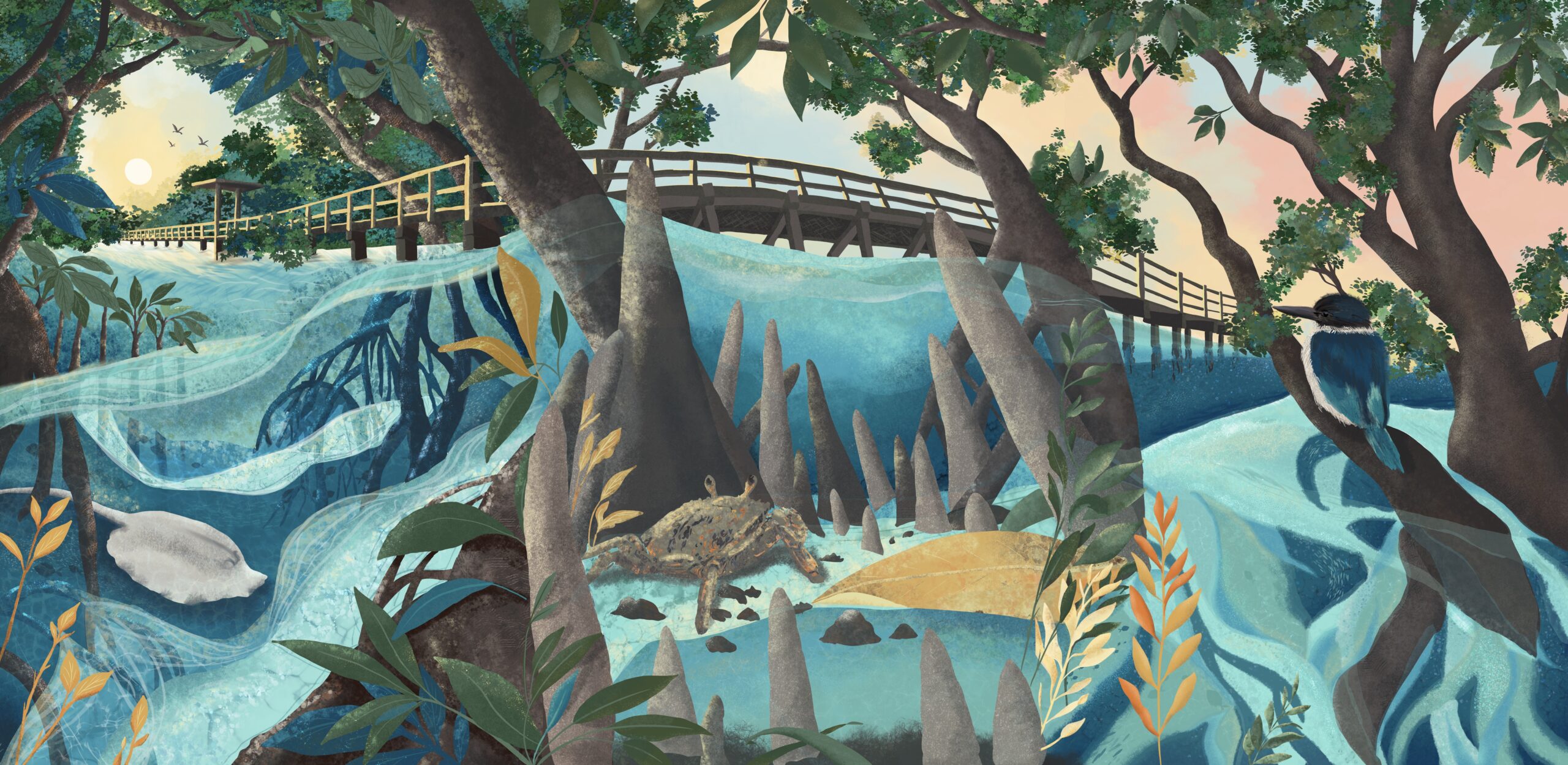
I was busy thinking about a hundred other things when a kingfisher interrupted my entire day.
Not deliberately, of course. It was simply going about its business.
I, on the other hand, was having a moment.
Disbelief. Awe. The sort of happiness that makes you forget what you were thinking about in the first place.
And to think, I’d been walking past this place for ten years.
In fairness, the creatures had been announcing themselves the entire time and apparently, I wasn’t listening.
I’m going to invite you to do something slightly ridiculous.
Pick something nearby that isn’t human. It might be A bird, tree, crab or even a particularly interesting patch of mud.
Let’s pretend you’ve been introduced.
What might the beginning of a friendship look like when neither of you speaks the same language?
You might have arrived thinking you were going for a walk…in fact you’re in rather extraordinary company and some of your fellow travellers have roots, claws, wings or a particular fondness for mud.
Six hundred and fifty metres doesn’t sound like much. Until you consider how many lives are squeezed into it. Some are singing, some are fishing, some are eating each other. It’s quite the neighbourhood.
Perhaps you’ve stood here watching the tide turn the water turquoise, a stingray passing silently beneath your feet, the last light catching the mangroves.
Beautiful, isn’t it?
Yet perhaps this place has remained a familiar acquaintance rather than a friend. Somewhere lovely to visit, but not someone you’ve really taken the time to get to know.
That was my experience until I listened a little more artfully…
The art of listening isn’t simply about observing a place. It’s about discovering that we’re already part of its story.
Here’s a rather strange experiment.
Find a tree and stand beside it.
Now, for a moment, imagine your feet have become roots.
You can’t wander off. You can’t turn around to see what’s behind you.
But you can feel the breeze, the warmth of the sun and the ground beneath your feet.
What would you learn about this place if you had to experience it from exactly here?
The friendships we treasure ask something of us in return. Perhaps we’ve been a little presumptuous with this place when we’ve admired its beauty and enjoyed its company. Maybe even learned a few names.
What does it mean to really get to know a place?
What might happen if we arrived with fewer assumptions and a little more curiosity?
Plant your feet in this moment and lean towards your nearest tree friend.
Take a closer look at its leaves. Politely turn one over and notice what is hiding underneath. You might be surprised, there are some here have freckles….
Now let’s find another tree nearby and do the same.
Is it Bigger or smaller? Thicker or thinner? Smooth or rough?
what about their roots?
Do they stand on stilts, poke up through the mud, or are they disappearing beneath your feet?
Perhaps you’ve noticed something you hadn’t before or maybe you’ve found yourself looking a little longer and wondering a little more.
There’s a line from Alice Fulton’s poem called the Cascade Experiment that keeps coming back to me:
“We need to meet the universe halfway.”
I rather like the thought of meeting this place with a long, loving look.
I had always thought high tide was my favourite time here. The sand remained visible beneath my feet, the water turned turquoise and clear and the flooded boardwalk brought me the sensation of being so much closer to a world we usually have to walk around, rather than above.
I had thought the mud at low tide a less ‘pretty’ time of day. I knew the crabs were hiding somewhere but didn’t put much thought into how they drag a mangrove leaf into their tiny entrance holes in the mud.
I didn’t stop to think about which tree liked their feet salty on a daily basis, like me, and which might be more of a ‘watch from the sidelines’ kind of player.
The, Funny thing is, the more I noticed, the less anything seemed to exist on its own.
Each time I returned, I found something else worth investigating. The bark. The freckles on the underside of a leaf. The curious salt left behind on the surface of the rounded leaves.
If you happen to find the right flowers, lean in for a sniff. I won’t spoil it for you, although I will say that banana milkshake and vanilla are definitely involved.
I realised that though there was 650 metres of boardwalk, not all mangroves are the same.
So I encourage you to allow yourself to be enticed by a leaf…
Yep, a leaf.
Find one that catches your eye. Perhaps it’s shiny, strangely shaped, or looking a little worse for wear.
Take a closer look. Turn it over if you can reach it without disturbing the tree.
Is it the same on both sides? What about its edges? Its colour? Its texture?
And here’s a curious thought.
What if this little leaf could tell you something about the life of the tree it belongs to?
Because around here, even the leaves have some rather peculiar stories to tell.
First, meet the grey mangrove. The familiar face of the neighbourhood. You’ve probably walked past hundreds without a proper introduction.
Its leaves are green above and almost silvery-grey underneath. Look down in the mud, you’ll find hundreds of little fingers poking up like breathing snorkels. They’re called pneumatophores, and they’re actually roots!
Once you recognise those peculiar little snorkels, it’s rather difficult to go back to seeing just another mangrove. Look for “the Snorkeller”
The red mangrove is the fanciest of these friends, with plump green leaves, red freckles underneath and roots that spread like the stilt legs of a giant ent. Its botanical name, Rhizophora stylosa, sounds like a spell, and its long seedling hangs from the tree like a magic wand. Honestly, it’s practically begging to be called the Magic Mangrove.
The orange mangrove is a little more elusive, looks almost rogue and could easily be masquerading as an elegant indoor goddess of garden foliage. If your houseplants had knobbly knees, that is. This one is harder to spot from the trail; I know of only three so far, and perhaps you can help find more. Look for the little sign on the trail. There’s a mystery to solve.
My personal favourite is the river mangrove, a rounder, shrub-like character with curved leaves that glisten with salt in the sun, how glamorous. In spring and early summer, its flower buds put on a spectacular show as they open like little fireworks. And the smell? banana milkshake with a hint of vanilla. Which frankly, brings all the birds to the yard. She’s the Milkshake queen.
The yellow mangrove is here too, somewhere beyond the boardwalk. I have not yet met it in person yet, so for now it remains our mysterious unseen character. Apparently part of the neighbourhood, but refusing to make an appearance. I’m still hoping for an introduction.
My phone could tell me the name of a mangrove.
Very helpful. Thank you, phone.
But a name, it turns out, is a rather small part of an introduction.
And the more I got to know these peculiar neighbours, the more gloriously mysterious they became.
I thought I was finding answers.
But I turns out, I was collecting questions.
Each difference I noticed made me more curious. Friendship works much the same way: you learn one detail, become intrigued and return with better questions.
And the funny thing about getting to know these neighbours? The more familiar they became, the more they surprised me.
I have a challenge for you. Find something you’ve walked past already. Now see if you can catch it doing something you didn’t notice the first time.
Getting to know these neighbours is a rather unusual business.
You can ask a mangrove all sorts of questions. Why do your roots grow like that? Who’s been nibbling your leaves? What’s going on beneath that mud?
But don’t expect a straightforward answer.
Sometimes you have to come back tomorrow. Or at low tide. Or even in another season.
And sometimes, you simply have to admit you haven’t the faintest idea.
Would you permit your eyeballs to chase fish for a while?
Or become unreasonably invested in a crab and its antics?
Or you could even allow your chin to choose a bird to gawp at.
It’s funny how quickly time disappears when something has your full attention.
One minute you’re going for a walk. The next, you’ve spent ten minutes watching a crab, and you’ve got absolutely nowhere.
Except perhaps a little further into its world.
What would it be like to listen with your belly button? Or some other obscure body part like an elbow?
The funny thing about trying to listen with your elbow is that it makes you question what listening even is.
And once you start wondering how a crab, a bird or a mangrove experiences this place, your own way of seeing it begins to feel like only one possibility among many.
Remember when I asked you to introduce yourself to someone here?
Well, I hope you’ve enjoyed meeting the neighbours.
Perhaps you’ll give the Snorkeller a little nod on your way past and keep an eye out for the Milkshake Queen.or stop to see what that crab is up to.
Funny, isn’t it?
You came here for a walk.
And now you’ve got friends to say hello to.
Have your edges met this place by now?
It’s not so different from how we make friends with people, so I’m not sure why I thought I ‘knew’ this place, when I hadn’t bothered to hang out intentionally with any specific mangrove, bird, fish or creature before. I took for granted their place here.
I wonder, would you whistle back to a bird?
I became rather curious about who was doing all the singing around here.
One bird in particular caught my attention. The mangrove gerygone. With a name like that it should surely be here somewhere.
I’d been listening to recordings of its call, trying to work out whether I might recognise it in the wild.
I brought a friend along to investigate. I began to say: “It sounds like…..”
Nature apparently decided my rendition was going to be substandard.
The gerygone interrupted!
[SONG]
I gaped. The song was delicate, astonishingly loud and perfectly clear. We walked the boardwalk until we spotted its source: a tiny bird, almost a cotton ball on stick legs, belting out an absolute banger. If you spot it, you’ll be surprised too, as they are super-fast flitting, very tiny and it’s like hearing Adele’s voice, erupting from a bird smaller than a sparrow. Projection is on point.
Another friend helped me find its nest amongst the firework buds of a river mangrove.
And this bird doesn’t do things by halves.
Its nest is a whole cocoon of feathers, twigs and soft materials, cleverly disguised as flood debris.
Imagine an egg-shaped enclosure with a kite tail dangling underneath.
That little tail isn’t just for decoration. It may help the nest remain stable in strong winds and channel rainwater away.
And the entrance? So tiny and well concealed that it took us several minutes to find it.
An entire home, hidden in plain sight.
Architecturally ingenious and masquerading as something the tide left behind.
Now, I wonder who’s singing around you?
Perhaps there’s a bird calling nearby. Perhaps several are having a rather animated conversation.
Listen for a moment. You might need to take your headphones off, See if you can pick out just one voice.
Choose one bird call and try to carry its rhythm for ten slow steps.
Don’t worry about getting it right. The bird will correct your accent.
Did you have a little giggle, a gift of a moment stillness or perhaps a gasp at something you weren’t expecting?
I love the peculiar enchantment of seeing something familiar as though for the very first time. This place has been getting under my skin.
What surprised me most was that somewhere in all this noticing, I found myself learning things about myself, too and I hadn’t expected that.
Little by little, these encounters have been weaving themselves into my sense of belonging.
It is as though I wasn’t finding somewhere new to call home, I actually discovered a home I already belonged to.
I stopped long enough to hear an entirely new bird call.
[FIG BIRD CALL]
“Can you see it?!” I was practically shaking my friend by the arm.
“Who is that?” Neither of us knew.
It flew off before we’d seen much more than the green feathers on its back.
But, One search later, we’d met the figbird.
Since then, I’ve rarely walked this path without seeing it or its mate.
Every time I come back, I see something or someone new, a whole shrimp team doing clean up near the pneumatophores at high tide, or a new bird “unlocked” by training my ears to tune into their song station.
Do you ever wonder: Who’s checking you out on the boardwalk? They might be feathered, or clawed or even bark?
Take some time to look back and give them a wink.
Walking this path with Kombumerri–Ngarangwal cultural ecologist, Clinton Brewer revealed another way of sensing the area. He explained that some animal names are phonetic or onomatopoeic: dih-dih, a name for the kingfisher, echoes its call and teaches the ear what to listen for. [KINGFISHER SOUND]
Because dih-dih is also a musical rhythm (ti-ti), I began to hear the ecological landscape as composition, not just as sound. Each time I return, another instrument seems to join the symphony.
An orchestra of feathered lunatics and I am part of the chorus rather than the conductor.
If you know how to listen, their sound tells you where you are in time.
Clinton Brewer
I like to say, all these birds, when the Nyangga-Gayan that means sun setting, they like to have a gossip. And then when the sun’s setting, that’s when they have their last yarn today and they’re about to go to bed.
[Bird song]
Now, if we think of, the sound of our animals names and the phonetics that come with them, one we often hear over this area and through the gold coast. You’d call it, The common name, yellow tailed black cockatoo or ( Zanda funerea.).
[Black cockatoo call]
In our language, Wayilahr, because for us when they call you hear the eeedah or Wayilahr, or yellow tailed black cockatoo.
It also goes for the pied currawong, now currawong is of course a first nations indigenous name, for me in Kombumerri, within our yugambeh language speaking region, we have a very similar name for currawong, Jullawong, now the pied currawong has different calls wheever you are in Australia.
When I’ve been down in you know, curi curi Jagun, that’s NSW, Victoria, blackfella country, they are very different call to what we hear. However, on the Gold Coast, in my language, through our culture, the pied currawong, we call it ‘Jalwang’, because they go ‘kuru kuru kuru. So ‘Jalwang, Jalwang’ is a word for pied currawong.
[Currawong call]
Parallel with that, toresian crow as well. Crows have many different names right across Australia and all the culture groups and family groups. On our grandmother’s country, which is Quandamooka, in Minjerribah, Jandai language, they got about four or five words for crow. One of the words for crow is WAK – WAK, ‘wak wak wak wak’. Wagga Wagga, all the way down in New South Wales, known as place of many crows. On the Gold Coast, ‘Wagahn, Wagahn’ is a word for Torresian crow because they go ‘wak wak’. ‘Wagahn’ is Torresian crow for the Gold Coast.
[Crow call]
AMANDA
I was beginning to realise that a name could tell me far more than what to call something.
Sometimes, it seemed, there was a whole story tucked inside.
And sometimes, you could almost hear the creature moving…
CLINTON
So, spiders, if we think of a spider, they’ve got these eight legs scurrying, moving around. Baran-Barahn, So, Baran-Barahn from what I interpret and understand, Baran-Barahn it’s like a quick. If we were to tap a desk or piece of wood or something, yeah tap, tap tap, Baran-Barahn. If you repeat that Baran-Barahn Baran-Barahn I’m just saying spider spider spider,
Baran-Barahn it’s not a sound a spider would make, it’s not visual particularly of it’s camouflage or it’s patterns, it’s descriptive of it’s legs.
AMANDA:
Place names can also hold information about landforms. Clinton explained that the ending ‘bin’ can mean a place of something; in Currumbin, the name may refer to a sandy river mouth or outlet.
The name for the red-tailed black cockatoo can preserve memory of its historical presence even where the bird is now absent. Names can offer a glimpse of how older generations knew Country and invite us to imagine the landscape 100 or 200 years ago. Language can help you begin to understand the history of the place you’re standing in.
It’s strange to think that a name might outlast the creature it belongs to.
We can look around and assume this is how the place has always been. What if the names tell us otherwise? A little piece of the past, still here in the language, even when the creature itself is gone.
Learning names in the language of Country made sound, behaviour and place feel inseparable. A name was no longer simply a label; it became an invitation to listen for relationship.
Walking on Country with Clinton reminded me that belonging isn’t something we have to find. We’re already part of this place, invited to share in its life and take responsibility for how we care for it.
It makes me wonder if this place has an accent? Like a fingerprint of sound which doesn’t exist anywhere else. How special is that?
It is like sound engineered belonging.
Pause and listen for the accent of this place.
Which sound could belong only here?
Which part of you answers when you hear it?
Meeting nature here felt like finally being introduced to a quiet family member who had accompanied me for years. I had mistaken familiarity for relationship.
Every time I return, the more fond I become of these peculiar neighbours.
I hope the ‘Art of listening’ helps you meet the universe halfway. May the gerygone interrupt the urge to rush, until you find yourself waving back at crabs.
The connection is already waiting in a kingfisher you nearly passed, salt shining on a leaf,
or a call you have not learned to hear yet.
Notice one small thing, then return and notice again. Let the boardwalk become a path to deeper relationship, where we become more open, more attentive and curious by nature.
If you enjoyed this experience, a free Curious by Nature postcard is waiting for you at Palm Beach Pool Café. Ask the staff for one to keep or share with a friend.
The Nature of Us
Curious by Nature🍃
the Art of Listening
By Amanda Lanham
Artful Narratives
“ooooh I wanna dance with somebody, I wanna feel the mud with somebody” or so says that purple dancing crab, at least in my head.
I wonder if you’ve noticed them, they’re below the boardwalk at low tide, with their mates, the soldier crabs.
The reason they’re purple? Aside from the obvious joy of flamboyance? That’s their adult colour, as adolescents they’re often black with orange claws.
Stop for a minute and let your eyes rest amongst the mud.
Watch the crabs with the same sized claws for a minute, are they waving back at you? Kind of like an airport worker waving their arms and the flags to guide a plane in? That’s called semaphore, a way of sending signals using flags or arm movements and that’s how these little crabs got their name! The best thing is, scientists still aren’t certain why they do this.
What do you think the crabs are trying to signal?
Imagine for a moment you’ve shrunk down to the size of one of these little crabs. Just 2cm tall, standing in the mud. Those mangrove roots are suddenly enormous, the grains of sand aren’t so tiny anymore, and the boardwalk is towering somewhere above you. What would the world look like from down here?
The art of listening isn’t just about spotting who’s here. It’s about discovering the secret lives happening between them. Who’s eating whom, who’s sharing a home, and who’s causing trouble in the neighbourhood.
What’s all this peculiar artwork scattered across the mud? Tiny balls of sediment, arranged in patterns radiating out from little burrows.
Have the crabs been decorating? Perhaps they’re accomplished landscape artists?
Actually, they’re busy sorting through the sediment for food, leaving behind these extraordinary little creations. And between them, tiny sideways footprints tell us stories of who’s been wandering about.
At first look the mudflat appears completely still, but it is actually being dug, eaten, aerated, processed and rebuilt, by tiny little critters who scuttle away when we come close.
Sand worms also leave ribbon like wanderings from their burrowing which moves particles and reintroduces oxygenated water into otherwise clogged sediment. Now imagine shrinking even smaller, beyond the size of the crabs and worms, right down into the microscopic world. They alter the tiny habitats available to microbes and other organisms.
The crab isn’t digging to do the mangrove a favour. Crabs aerate the mud of the mangrove’s roots.
The mangrove leaves feed the crabs and kingfishers eat the crabs. The eco-system becomes is more than a food map, it’s a community of reliance and connection.
All that activity under our feet. I wonder who’s been getting up to mischief in the leaves?
See those strange little lumps?
They’re called galls, and they’re not insects or nests stuck onto the leaf.
They’re actually the plant’s own tissue!
Some insects can trick a plant into growing these structures, creating a little home and food supply for their young. The insect has effectively induced the plant to build the structure. Ingenious really, you are basically a squatter who convinced the owner to create your own haven. It’s further evidence of an animal you may never actually see.
And to think, that’s just one leaf. Imagine what we’re missing in the next five metres.
CLINTON
That’s exactly right sister, If you go out here, go for an insect specialist, an entomologist, you’re not going to get far on this track. You might get, goodness, only about five metres in half an hour, there is an intense level of detail and exquisite beauty and the granularity of all these living things around us and taking the time to just focus on that branch or that log or that post or that bit of the earth for 5 minutes, there’s little tiny beautiful biological cities everywhere with their own happenings and goings [on], all day every day, it’s a beautiful thing.”
AMANDA
Clinton Brewer, a Kombumerri–Ngarangwal cultural ecologist has a way of looking at this place that makes me realise how much I’ve been walking past
I used to arrive asking “what lives here” while his approach is about
“What’s happening, what or who causes this, and what does that tell me?”
Look at the little patch of life closest to you. How much can you discover without taking another step?
We’ve met crabs rearranging the mud and insects persuading leaves to build them a house. What happens when the neighbourhood itself starts to change?
Noticing relationships has made me realise how confident I feel about things I seem to know little about. I walked here with an environmental educator named, Gina. She asked me if I knew the name of the casuarinas. They’re the trees with rough bark and long, wispy, needle-like leaves that whisper in the wind. They’re at the western, pool entrance of the mangroves. I was confident, I was going to give myself Ten out of ten, practically a botanical genius.
And then she says, “Yeah, and this community is endangered here.”
Wait, WHAT, THOSE? I actually thought she was joking. They’re everywhere!
I realised I have been looking at these trees for years, I know their name and that black Cockatoo’s think they’re delicious. “This type is a Casuarina glauca and they’re boundary trees”, she explained. “They live in that in-between place not quite mangrove, not quite dry-land forest.”
Gina wasn’t asking if I could identify a tree, she was showing me something I’d never thought to look for, “the tree wasn’t the story”. The story is where the tree grew, distance to the salt water, the sandiness of the soil, how often the tide reached its roots and also what happened when the water stayed too long. Now I don’t just look at a tree, I look at the neighbourhood.
Look beyond the tree nearest you.
What else is growing around it?
Where does one kind of landscape become another?
The Casuarina glauca is part of something called the Coastal Swamp Oak Forest ecological community. It’s not just the trees, but the whole swampy neighbourhood, with its local shrubs, grasses, frogs and all the relationships between them.
The Casuarina glauca trees themselves are doing fine, but this ecological community is endangered. So while the ‘houses’ are doing okay, the actual ‘suburb’ is facing eviction.
These swampy “neighbourhoods” are squeezed by land development and they are vulnerable.
If their roots spend too long underwater, it spells trouble for the whole neighbourhood and for the Black Cockatoos, dining at this exclusive, threatened restaurant, as their favourite food may be at risk.
Even the toughest neighbours have their limits.
If the trees disappear, what happens to those living amongst their branches or sheltering beneath them? What happens to all those relationships?
Sometimes absence tells a story too.
It’s difficult to see where boundaries end, how the plants interact to the coming and going of the tide, how the animals adapt, and how our human impacts forced nature to change.
Even very adaptable plants and animals have extremes,
points at which too much is still too much.
While some residents struggle with changing conditions, the grey mangrove developed some pretty remarkable tricks to living here. The clever thing is, those adaptations don’t just help the mangroves.
You can find the grey mangrove by looking for the roots sticking up out of the mud, they look a bit like snorkels and can extend 10-20 metres from the trunk. When you turn over a leaf, you’ll notice the underside is a lighter, almost silvery grey-green.
Have you ever wondered how mangroves anchor and keep their roots supplied with oxygen when they are growing in conditions that would kill most other plants? There’s the soft oxygen starved mud, the salty water, not to mentioned they are flooded twice a daily.
Grey mangroves have three types of roots, each with a different job.
Their large horizontal roots are structural support, an underground framework for the pneumatophores roots. These are the ones that look like “snorkels sticks” for oxygen. Their pores called lenticels exchange gas when exposed to air. When the tide comes in and covers them, that gas exchange is interrupted.
It’s as if there is communication from the snorkels to the tree through the tides. I now imagine that they are saying: “high tide is coming, time to close up!”
If you could dive under the mud, would you see the snorkels calling out to warn the tree of a high tide? Would the crab still be waving?
The third root type are finer and smaller for absorbing nutrients from the tides. Each mangrove solves the problem of getting oxygen in its own way, depending on how it grows. Red mangroves use their stilt roots while the orange uses its knobbly knees.
Imagine you’re down there scuttling amongst those snorkel roots, 2cm tall again .
Those same roots that help the tree breathe are part of your neighbourhood too.
What would life be like amongst this forest of snorkels? Would you still be waving?
There’s even more going on beneath those tiny crab feet, Mangroves aren’t just looking after their own little patch of mud. They’re also helping to store carbon, and an enormous amount of it is tucked away beneath our feet. Coastal wetlands like these can store around five times as much carbon in their soils as ecosystems on land.
Stop for a moment and tell me how many colours do you see on the mangrove tree closest to you. I bet they’re not all green….
The colours and scents tell other stories. The yellow leaves of mangroves are sacrificial, absorbing the extra salt. Kicked out of the tree, fed to a crab, left to decompose for even smaller bacteria. The end of life doesn’t mean end of purpose here. Decay isn’t really disappearance, it is simply transferred. Everything becomes a useful part for someone or something else in the ecosystem.
I now see mangroves as shoreline engineers. Their life also creates home for the food we eventually catch out in the open ocean. So much of what we eat starts here in the mangrove nursery. It provides feeding grounds and shelter habitat for fish, prawns, mud crabs, whiting, bream and other coastal fish.
Lean over the boardwalk now and check out what lives beneath, stop for a moment.
Pick a little patch of water amongst the mangrove roots and keep your eyes on it.
Don’t go searching somewhere else just yet.
Wait for something to move.
Can you spot a fish? A crab? Something even smaller?
It was 6 months after I started this project before I found shrimp!
They were hanging out with a school of fish and it made me wonder what conversations might be going on between them.
What do you think they’d be gossiping about?
While the mangrove leaves feed crabs, they also provide nutrients for a host of algae, phytoplankton, and even seagrass.
These mangroves are looking after this patch of creek, their roots trap sediment, and the plants and tiny organisms living amongst them have a special role in keeping the water healthy for other areas like our beaches. What happens further upstream can affect the water here too.
Kristina from Watergum told me about these invasive vines in the Currumbin Valley that climb right up into the tops of trees, sometimes completely smothering them until the trees die.
I knew weeds could be a problem, though I hadn’t really thought about what happens next, because those enormous trees aren’t just standing there looking fabulous above the creek, they’ve got these great big root systems holding the banks together too.
When the trees die, the roots eventually go too, and suddenly all that soil which was being held in place can start washing into the creek.
So what looks like a problem high in the canopy can become a problem in the water.
Then there’s also the question of where that water goes. It doesn’t stay there, it travels, carrying sediment and all sorts of other things downstream, until eventually it reaches the estuary and the ocean.
Watergum call this their headwaters-to-ocean approach, looking at the whole creek system rather than just the little patch in front of us.
Fish and other creatures carry nutrients and energy through the mangroves, seagrass beds and ocean. A bit like this boardwalk. This place between the beach and the valley, connects worlds that might look separate but are very much part of one another.
For a moment, don’t look for anything. Just listen. What’s the closest sound you can hear? And then what’s the furthest away?
The mangroves aren’t the only ones dealing with all this salt. Look closer to the sand and you’ll find a low-growing, succulent type bush called a saltbush, with little fleshy leaves.
The beautiful reds appearing in some of the saltbush leaves? Gina explained that as the plant takes up more salt, its leaves can turn red. What we’ve been admiring may actually be a sign that life here isn’t quite so easy. There’s a lot to contend with in this neighbourhood. Too much salt, not enough fresh water, it shows how different organisms are dealing with salt in their own peculiar way.
The rather fabulous little red and orange fruits of the ruby saltbush are also eaten by birds and lizards. Birds carry the seeds away and deposit them elsewhere, sometimes beneath the very trees they’re perched in. The bird gets lunch, the saltbush seeds get a free ride, and somewhere else new plants grow. I wonder if the bird has any idea it’s been recruited as a gardener?
The plants while quietly minding their own business are changing the neighbourhood for the creatures around them, nobody gets to make a living here without affecting somebody else.
The milky mangrove was another type which used to live in this neighbourhood, but they are since gone from this boardwalk. It’s like losing someone from a friendship group. Their loss leaves an empty chair and it changes the dynamics of everyone around them. Biodiversity isn’t simply lots of different species; It’s also about the variety of roles, interactions and relationships within each ecosystem.
My friendship with this boardwalk has changed not only who I see but how I see. I wasn’t learning about this place, I was learning with it. Facts are fun but friendships are better.
I feel like this place is a pandora’s box of wonder, and every time I think I’ve seen what’s inside, something else comes crawling out.
I think the times where I feel a little oblivious and humbled about my knowledge has kept me curious and intrigued to see with fresh eyes again and again. Awe seems to come wrapped in a sandwich of surprise and hope. Walking here and seeing the landscape as a living artwork doesn’t have to turn every mystery into an answer either, sometimes you’re more curious about the things that remain unknown.
I wonder how many relationships are unavailable to us as humans simply because we haven’t learned how to perceive them yet?
I didn’t become part of this place when I started paying attention, I was enchanted by discovering a connection already here.
The Art of listening is about being curious by nature, and this practice has given me so much more than I had ever thought possible. Slowing down, taking more breaths, wondering more and practising looking again and again with fresh eyes has naturally become how I look elsewhere too, with other people, and I notice I am kinder to myself.
How often do we swat something away before we’ve even wondered why it’s there?
Alice Fulton, in one of her poems wrote “We need to meet the universe halfway” and friendship gives us a reason to care about what happens next.
Remember Clinton, the Indigenous storyteller who showed me just how much I’d been walking past without noticing?
He told me:
CLINTON: Hope is my currency
Hope is necessary, it is I think a requirement, it’s what has driven most if not any change through human history, it’s that spark of light in the darkness of whatever it is, things, people, organism are going through. Because hope is an understanding that whatever is happening here, if it’s bad, it can be better. And hope is also understanding that if there’s something good, it can be better. So hope is my currency and it’s what leads to change.
AMANDA
We talked about how hope can be a catalyst for change, especially when circumstances seem overwhelming. For Clinton, hope is more than courage. It’s about valour, choosing to act even when the odds are against you.
Hope opens possibilities, creates movement and gives a voice to people and animals who need it most. Especially in the loud silence of disappearance, it’s an act of conviction.
We all share this earth where we walk, swim and dance and have responsibility. We are INVITED.
Kristina from Watergum told me something about the Currumbin Valley that I found completely fascinating. They’ve been working in areas so overrun with weeds that there were barely any native plants left to be seen. When they started clearing the weeds, all these little native seedlings started popping up. Not just a few either, heaps of them, and in less than a year!
What I love most is that many of these seedlings came from seeds that were already there, in the soil, waiting.
Isn’t that extraordinary? All that life, sitting quietly beneath the ground and we might have walked straight past it thinking there was nothing there.
I wonder how often do we mistake something we can’t see for something that doesn’t exist?
The plants were doing their part too, we didn’t have to create the possibility, simply help make some room for them to thrive. This Valley is a resilient one and our help can go a long way.
I think what I’ve found most moving is realising that we have a responsibility to this place, and sometimes that responsibility feels enormous.
You might even feel the tension of feeling invested in something which is endangered. To me, the thought of carrying this alone is unbearable.
It’s heavy, because it’s so special and unique and worth saving. When we share the load, something changes because the weight becomes lighter, and what felt like an enormous responsibility becomes something we can carry together.
Rest now, again for the last time.
What have you noticed that you didn’t know when you first arrived?
Even if you don’t have the answers, what’s calling to you?
I think this friendship only felt one-sided because I hadn’t realised how much this place was already giving me.
Now I’m learning how to reach back.
Maybe you’ll walk a little lighter, be considerate of crabs and whistle back to birds.
If you enjoyed this experience, a free Curious by Nature postcard is waiting for you at Palm Beach Pool Café. Ask the staff for one to keep or share with a friend.